Portrait in Courage: Julia Acosta
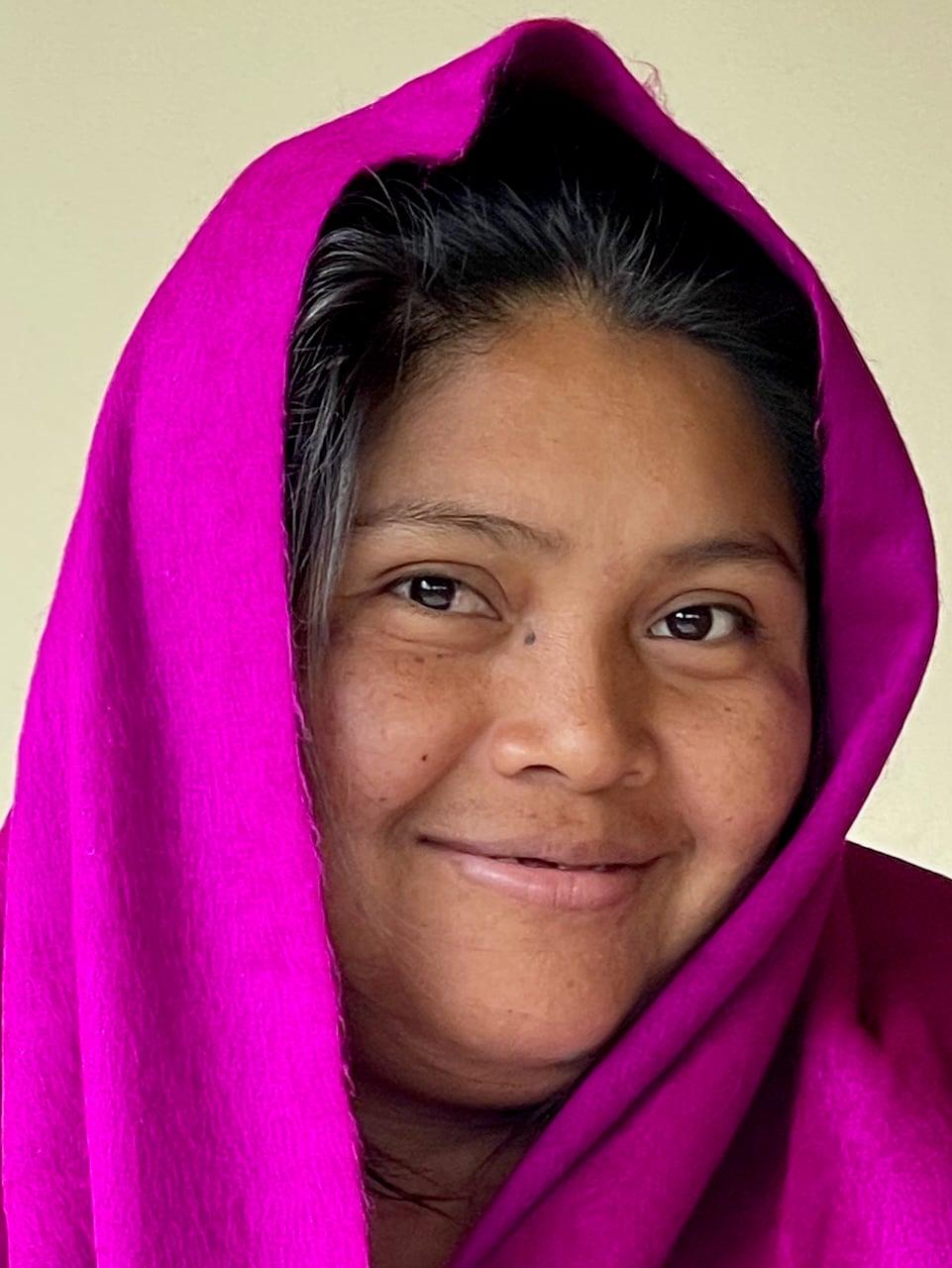
Lo Que Hay
The Day She Walked Out of Her Life
She Had Nothing
It Was Enough\
The bathroom floor was always wet. Not from a shower — from the drain backing up, raw sewage seeping across the concrete, and if you needed to wash, you balanced on the very edges of the shower pan and tried not to think about what you were standing in. The walls were cinder block. Where a wall should have been, a sheet of plywood hung in a frame. There was no kitchen, just a table. Outside, in the small yard shared with the neighbor — a local prostitute — old boards lay scattered in the mud, their nails pointing upward, waiting.
This is where Julia Acosta was raising her four children. It was better, by far, than where they came from.
Her husband was gone — no great loss, except that he took with him what little financial footing she had. He had no respect for her and believed education was wasted on their children. Her father had tried to help, but then he up and died.
She was alone — no job, no income, no wages, no way forward — with four children, and nothing but the fierce, unspoken thing that mothers carry when the survival of their children is at stake.
— ✦ —
The Arrival
Arriving at the Edge of Everything She Knew
The pandemic had emptied the world of certainty. But for Julia, the world had never offered much certainty to begin with.
In the Comarca — the sovereign indigenous territory carved into the mountains and jungles of Panama — life was familiar, grounded, and quietly brutal in the way that old poverty always is. Julia knew its rhythms. She also knew it had no future.
So she left. She gathered her four children, took what they could carry, and boarded a bus toward a life she could not picture and had never known.
“She came out of the Comarca seeking better opportunities — with a grade school education, no work experience, and options that were, at best, poor.”
Her cousin Modesto — the quiet, dependable caretaker of our small coffee farm in the highlands — mentioned that Julia was looking for work. What she knew how to do and what needed to be done were worlds apart, but I said yes. I would teach her to clean a modern house. It was a beginning.
— ✦ —
The First Days
Into the Unknown
When Julia’s children first laid eyes on me, they had never been outside the Comarca. They had never taken a bus, never ridden in a car, and never met a foreigner. Their world had always held the same faces, the same mountains, the same known edges.
Then there was me — pale, green-eyed, a creature from some other world entirely. Julia’s daughter Lilliana studied me with the solemn attention of a child who takes things seriously. Then she turned to her mother and asked, in the most natural way in the world: why didn’t they have green eyes like mine?
It was not a small question. It was the question of a child who had just discovered that the world was larger and stranger than she could imagine – the first crack of light into another dimension.
— ✦ —
Lo Que Hay
Whatever There Is
I remember one of those first days, standing in the kitchen, getting ready to prepare lunch. Julia had come to learn how to cook and clean, and I turned to her and asked: “What would you prefer to eat?” She looked at me with an expression I didn’t fully understand yet. Then she said, quietly, the three words that were the mantra of her life.
“Lo que hay.” Whatever there is.
It took me a moment to understand what those words really meant coming from her. In the Comarca, food scarcity is not an abstraction. There were days — many days — when neither Julia nor her children ate. Not because they forgot to shop, or because they were too busy to prepare anything. They didn't eat because there was nothing to eat. There was no money, no resources, no nothing.
The region they lived in is remote, windy, and in many areas barren. The mountains are difficult to cultivate in the dry season, and when the rains arrive, everything drowns in rivers of mud. The nearest markets are hours away, often reached on foot. Hunger was not an occasional visitor. It was a constant companion. The idea of being asked what she preferred to eat was not just unfamiliar. It was, in that moment, incomprehensible.
"Lo que hay." It is a phrase of pure, hard-won realism. It is also, I have come to understand, a kind of grace. You accept what is; you work with what you have. And slowly — if you are persistent, lucky, and willing — you create a life.
— ✦ —
The First Year
Rough in All the Ways That Honest Things Are Rough
After a couple of weeks in the cinder block room, we worked out a plan and Julia and her children moved onto the farm, into their cousin’s house. It was crowded, but there were no nails in the yard, and no backed-up drains.
There were bananas, oranges, and lemons to eat – right off the tree. And there was something harder to name — the feeling of being somewhere that felt, if not safe yet, at least less precarious.
The first year was hard. Julia, while a bit unsure of herself, was not timid — she had not crossed out of the Comarca to be timid — but she was unaccustomed to the relentless forward momentum of full working days, and the wild, wacky world of expats. Naturally proactive, she would tackle cleaning projects before I could say anything. Once she cleaned out several book shelves and neatly put the books back on the shelf - spine inward. Unfamiliar with books, she thought they looked neater that way. (We still laugh about this today!)
In addition to her new work, Julia dealt with her children who did not understand why they had to go to school. They made their confusion known with the full force of childhood resistance. Julia came home exhausted in a way that had nothing to do with the body and everything to do with the weight of reinventing a life while living it.
Life was messy, uncertain, and difficult, yet it required her to show up the next morning anyway. Julia showed up.
— ✦ —
Five Years Later
The Fire That Holds
Five years have passed since Julia walked off that bus. Five years of learning, of long days, of children who slowly — then suddenly — understood why education mattered. Five years of a woman building something from nothing.
Julia and her children are thriving. That word — thriving — is not one I use loosely. I have watched them. I know what they came from. Thriving is exactly the right word.
Consider Dailin, Julia’s oldest, the girl who once rode a bus for the first time, wide-eyed and uncertain, into a world with green-eyed strangers, flush toilets, and school uniforms. That girl just walked across a graduation stage.
“Dailin is not just graduating for herself. She is graduating for every generation of her family that never had the chance.”
She is the first person in her family — ever — to finish secondary school. And she is not stopping there. She has enrolled in classes at the local university. She has a dream she says out loud without flinching: she wants to study gastronomia. She is already leading the way for her siblings, showing them what the road looks like when someone decides to walk it.
And Julia? Julia, who once stood in my kitchen and answered a simple question about lunch with three words of breathtaking restraint — Julia watches her daughter, and with tears in her eyes, she knows exactly what she traded the Comarca for.
It was worth it. All of it. The cinder block room. The plywood door. The first hard year. The exhaustion. The nails in the yard. The backed-up drains. The relentless, challenging and beautiful work of choosing a different life and then building it with her hands, one day at a time.
— ✦ —
Claiming Her Life
A Passion of Her Own
Julia, too, has found her own passion. Using a hand-cranked sewing machine, she has learned to make the traditional dresses of the Ngäbe women, and she dreams of starting her own business — making dresses, teaching others, showing anyone who will watch, what it looks like to build something from nothing.
That is what a FireKeeper does. Long before anyone can see the spark, they tend the flame in the dark. They keep going when the fire is low and the smoke is thick and the warmth has not yet reached anyone else.
They keep the fire.
— ✦ —
The Lesson in Courage:
Lo que hay is not surrender. It is the beginning of wisdom — knowing what you have, and deciding to build something extraordinary from it anyway.
Portraits in Courage is an ongoing series from Letters from a FireKeeper — an online journal from the highlands of Panama, where coffee grows slowly and visions take root.
Julia’s story continues.
If you have questions about this post, or a comment, you can reach me at Tammy@tammyladrew.com
#PortraitsInCourage#QuietFire#PowerRestored