Dancing for Josef Mengele — the man who had just sent her mother to the gas chambers.
A Portrait in Courage
Power lived from the inside out
✦ ✦ ✦
Dr. Edith Eger
Psychologist · Holocaust Survivor · 97 Years Old
They could command her body.
They could not own her inner life.
She was sixteen years old — a gymnast, a ballet student, a girl in love with Tchaikovsky.
She was 90 when she wrote her first book about the evil that nearly ended her life.
She lived in Košice with her parents and two sisters, and she believed, as teenagers do, that the world was largely knowable. That spring of 1944, she could not have imagined how completely that would change. The cattle car arrived at Auschwitz in May. Within hours, she was separated from her parents. She never saw them again.
On the journey to the camp, her mother had held her close and spoken words that were not comfort, but something rarer: truth. "We don't know where we're going. We don't know what will happen. But remember — nobody can take away from you what you put in your own mind." Edith would carry that sentence like a hidden lamp through the darkest years of her life.
"No one can take away what you put in your own mind."
Power in the camps was absolute and arbitrary. Guards decided who lived, who worked, who died — often for no reason legible to the living. Survival demanded obedience, silence, the art of disappearing just enough to remain. And yet, even there, something stayed untouched.
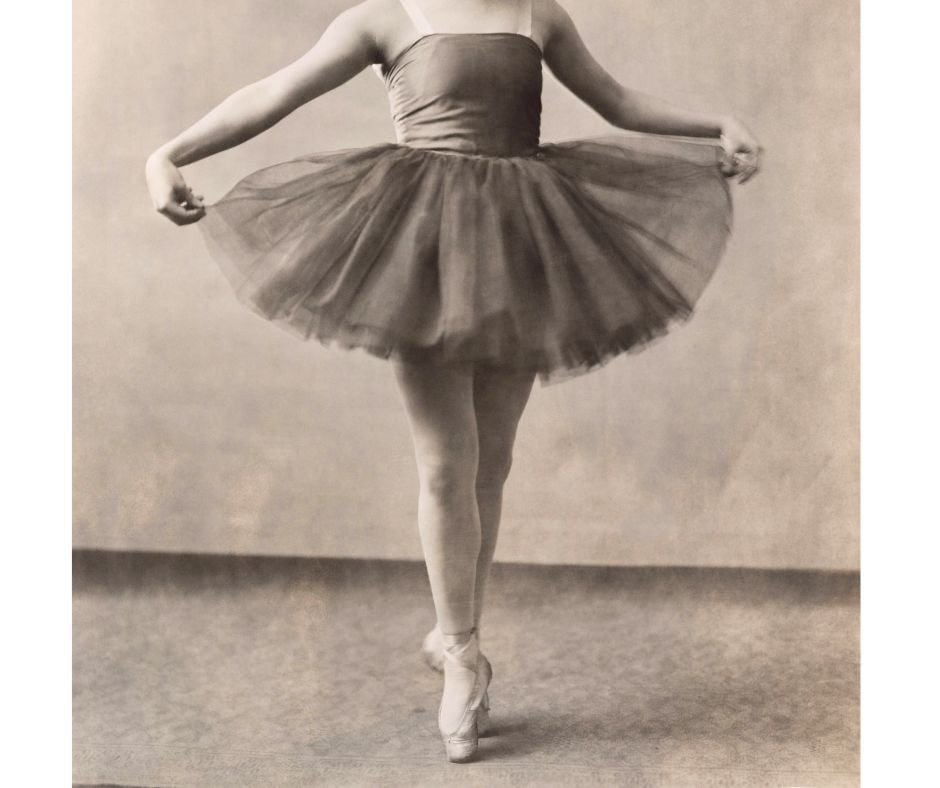
One evening, Edith was ordered to dance for Josef Mengele — the man who had just sent her mother to the gas chambers. She was starving. Her body was trembling. She danced to Tchaikovsky in a place built for extermination. And as she moved, she made a choice no one could see: she imagined she was dancing not for him, but for her mother. In that invisible pivot — surrounded by death, watched by a monster — she discovered something quietly defiant. They could command her body. They could not own her inner life.
That realization did not end her suffering. It did not protect her from the death march that followed, from the Gunskirchen camp where she ate grass to survive, from the moment — May 4, 1945 — when she was discovered near-dead among a pile of corpses by a young American soldier who noticed her hand move. She weighed 70 pounds. She had a broken back, typhoid fever, pneumonia. She was, by every measure, barely alive.
Freedom, when it came, did not arrive clean. Her body was broken. Her mind flooded with grief, guilt, and terror. Like so many survivors, she learned that trauma does not end when danger ends. It follows the body home. For years she lived with panic attacks, nightmares, the paralyzing belief that joy itself might be a betrayal of those who didn't make it. Survival felt heavy. Power felt suspect — because she knew firsthand how swiftly it could be taken, and what it looked like in the hands of the wrong people.
Eventually, she turned toward what haunted her rather than away from it. She studied psychology. She earned her doctorate. She learned to sit with pain — hers and others' — without fleeing or collapsing. She discovered that while we cannot change what happened, we can change how we live in relationship to it. That choice, practiced moment by moment, became her definition of freedom.
✦ ✦ ✦
Edith Eger went on to spend decades as a psychologist working with trauma survivors, veterans, and those living with profound loss — teaching that freedom is not the absence of suffering, but the refusal to let suffering become identity. In 1990, she returned to Auschwitz to face what she had long repressed, to reclaim her innocence and assign the shame and guilt to the perpetrators where it belonged. At 90, she wrote her first book. The Choice became a New York Times bestseller. She published her second book, The Gift, at 93. She remains, at 97, still seeing patients. Still writing. Still teaching.
Her courage is not dramatic. It is intimate. Disciplined. Relational. It is the courage of a woman who chose, again and again, over the course of nearly a century, to remain in relationship with her own inner life even when every external force worked to sever that connection. She did not survive in spite of what she endured. She was forged by it — and she made herself into something the darkness could not have predicted: a healer.
This is where courage begins. Not with control over circumstances. Not with absence of fear. But with the quiet, radical insistence that what lives inside us belongs to us — and that we are always, even in the worst moments, free to choose what we do with it.
If Dr. Edger's story stirred something in you, let it. Sit with it. Ask yourself what you've been carrying that was never yours to carry — and what you might put in its place. The inner life she protected against unimaginable odds is the same inner life you tend every single day. It is worth tending.
Dr. Edger's work is profound. You can find her books here.
If you have questions about this post, or a comment, you can reach me at Tammy@tammyladrew.com
#PortraitsInCourage#QuietFire#PowerRestored